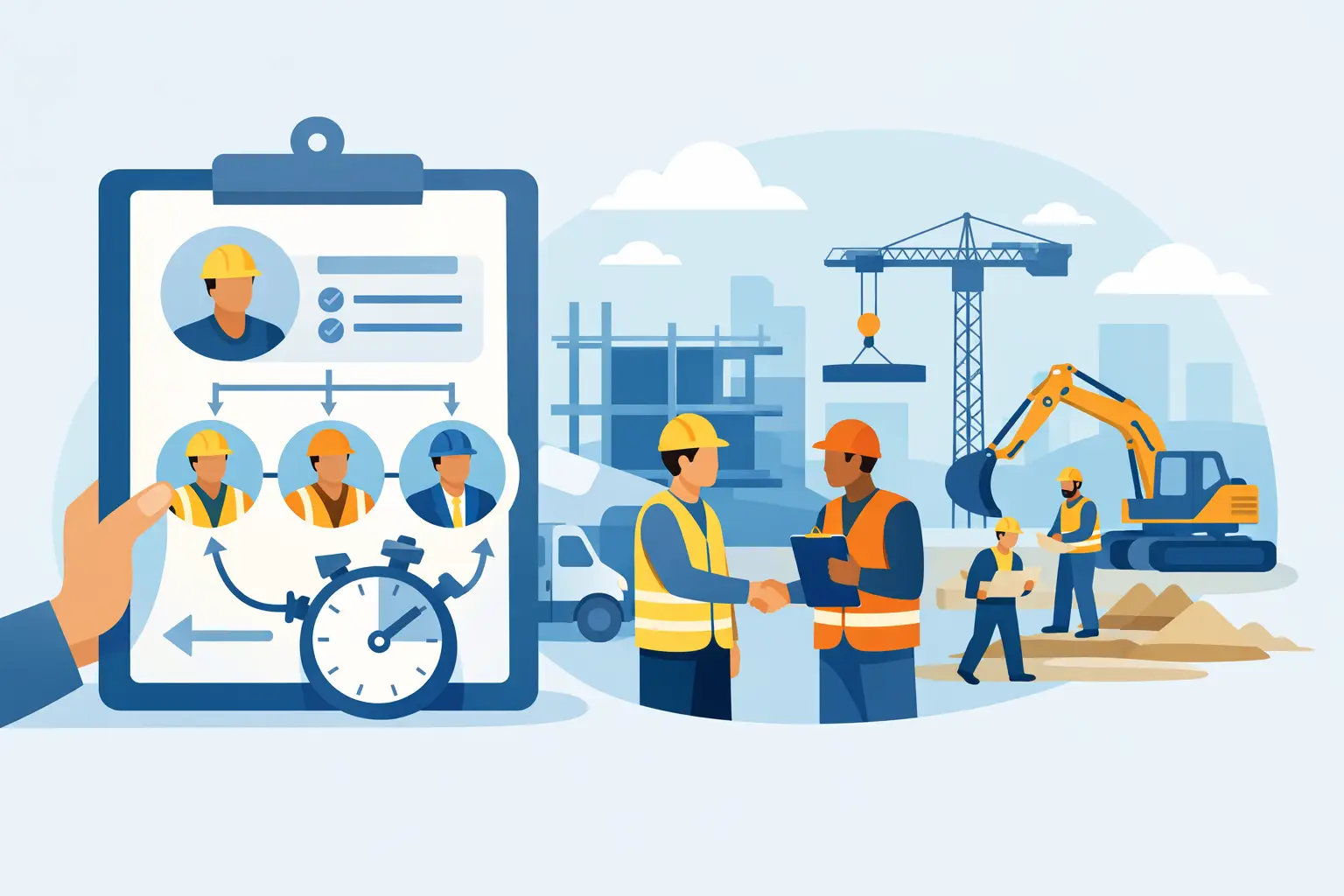
A superintendent needs two licensed electricians for a hospital renovation by Monday. An office manager needs a reliable HVAC tech before a service backlog turns into lost customers. In both cases, a trade hiring platform comparison should start with one question: can this platform help you find qualified people who are ready to work, not just collect resumes?
For construction and skilled trades employers, the right platform is not simply the one with the biggest candidate database. It is the one that reduces uncertainty at every stage - from confirming credentials to reviewing past work, starting a conversation, and getting a worker onto the job site. For tradespeople, the right platform should make experience visible, protect their professional reputation, and create access to jobs worth pursuing.
What Makes Trade Hiring Different
Hiring for the trades has a different set of stakes than hiring for a desk-based role. A candidate may need a current license, a specific certification, verified experience with certain equipment, or the ability to report to a project site within days. A résumé alone rarely gives a hiring manager enough confidence to make a fast decision.
The cost of a poor match is also immediate. A worker who cannot perform the required scope can hold up dependent crews, create safety concerns, miss inspection deadlines, or force a contractor to restart the search mid-project. On the worker side, vague job descriptions and slow employer responses waste time that could be spent earning.
That is why trade-focused hiring tools should be judged on operational results, not surface-level features. A polished job post builder matters less than the quality of the people responding. AI recommendations matter only if the data behind them reflects real trade skills, work history, location, availability, and credentials.
Trade Hiring Platform Comparison: What to Measure
A useful comparison looks beyond whether a platform lets employers post jobs. Most platforms can do that. The meaningful differences appear in how they establish trust, narrow the candidate pool, and move both sides from interest to action.
Candidate quality and trade relevance
Generic job boards can deliver reach, particularly for high-volume hiring. But reach can create more screening work when applicants do not have the required trade experience, certifications, or project background. Employers can spend hours sorting through candidates who are available but not qualified.
A specialized platform should organize workers by real trade categories and capabilities. An electrician should be able to present electrical experience, not get grouped into a broad "maintenance" category. A welder’s process knowledge, certifications, and completed work should be easy to assess. For employers, that specificity makes searches more practical and job matches more credible.
Ask whether the platform supports the details that affect your hiring decision: license status, years in the trade, project type, specialty, work location, availability, and relevant documentation. If those details are buried in free-text profiles, your team will still be doing the same manual screening it did before.
Verification that supports faster decisions
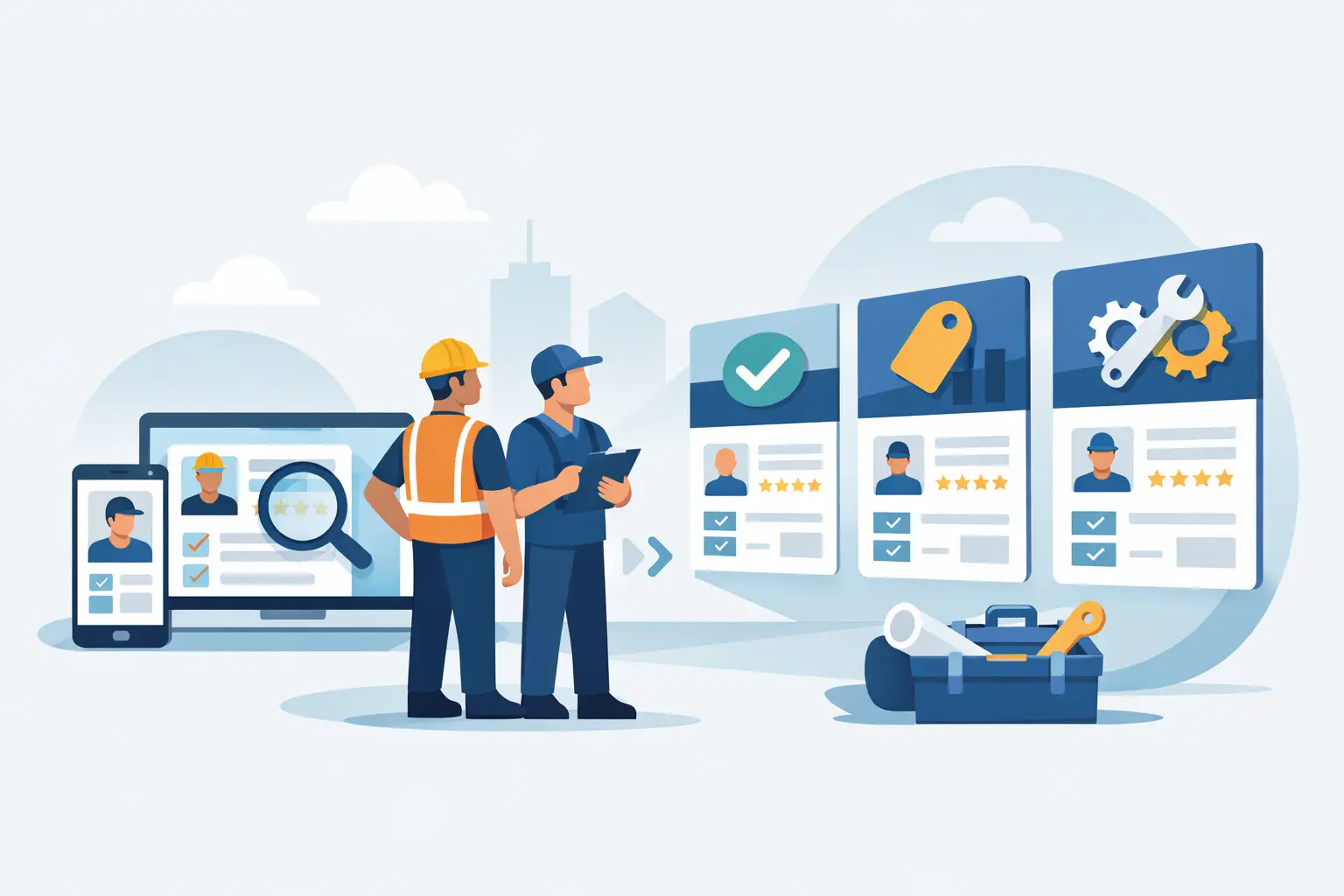
Verification is often the dividing line between a job board and a hiring marketplace built for the field. A profile may say “licensed plumber” or “experienced carpenter,” but employers need to know what has actually been checked.
Look for clarity about license validation, employment verification, identity checks, background checks, and ratings or reviews. Not every role requires the same level of screening. A short-term labor need may call for a quicker process, while work on occupied facilities, schools, healthcare sites, or regulated projects may require more documentation. The platform should help employers see the right proof without turning every hire into an administrative project.
Workers benefit here, too. Verified credentials give skilled people a way to stand apart from applicants who make unproven claims. That can lead to better conversations, stronger offers, and fewer situations where a worker has to repeatedly explain or defend their experience.
Portfolios and proof of workmanship
A good trade profile should show more than job titles. Photos of completed installations, finish carpentry, masonry, fabrication, mechanical work, or commercial buildouts can tell an employer far more than a generic skills list. Project portfolios give context: the size of the work, the materials involved, the type of site, and the quality standard expected.
Portfolios are especially valuable when hiring for detail-sensitive roles. A contractor filling a finish carpenter position may care about different evidence than one hiring for framing. A commercial HVAC company may prioritize system experience and job history over visual project samples. The best platform gives employers enough proof to evaluate the work while allowing workers to present their strengths professionally.
Matching and search speed
Speed does not mean skipping judgment. It means putting relevant people in front of each other sooner.
AI-powered matching can help when it uses trade-specific inputs rather than broad keyword matching. For example, matching a commercial electrician to a project may require consideration of location, license, availability, years of experience, project type, and stated specialty. A recommendation based only on the word “electrician” creates noise. A recommendation based on the full job requirement can shorten the path to a serious conversation.
Evaluate how quickly your team can filter candidates, save prospects, review qualifications, and act on a match. If a platform requires multiple exports, phone calls, and disconnected tools just to contact an applicant, it may add friction at the moment your project needs speed.
Communication built for field hiring
Construction schedules move outside standard office hours. Workers may be on a site, in a truck, or between jobs when an opportunity appears. Employers may need to confirm availability before a crew mobilizes the next morning.
Mobile-first messaging is not a convenience feature in this environment. It is part of the hiring workflow. Direct communication lets employers clarify pay ranges, start dates, job locations, required tools, and documentation quickly. It also gives workers a better way to ask the questions that determine whether a role is a real fit.
Pay attention to response tools, notifications, and message organization. A platform can generate strong matches and still fail if interested candidates cannot connect quickly enough to keep the hiring process moving.
Where Generic Boards, Agencies, and Trade Platforms Fit
There is no single hiring channel that works best for every role. A practical trade hiring platform comparison recognizes where each option has value.
| Hiring option | Best use case | Main trade-off | | --- | --- | --- | | Generic job board | Broad awareness and non-specialized roles | More unqualified applicants and heavier screening | | Staffing agency | Urgent coverage and managed temporary labor | Higher cost and less direct control over candidate relationships | | Employee referral network | Trusted introductions within an existing network | Limited reach and repeated access to the same pool | | Trade-specific platform | Qualified skilled-trade hiring, credential visibility, and direct outreach | Results depend on local worker supply and profile quality |
Agencies can be the right answer when your company needs someone immediately and wants a partner to manage payroll or workforce administration. Referrals remain valuable because they carry built-in context. Generic boards can help build awareness for entry-level or support positions.
But when you need direct access to skilled tradespeople and want to build a repeatable hiring pipeline, a dedicated platform is often the stronger long-term option. It gives your team a searchable talent pool, a record of past conversations, and a clearer way to compare candidates before committing time to interviews.
A Practical Evaluation Process for Employers
Before selecting a platform, define the role with the same precision you would use when planning a scope of work. Identify the trade, location, pay structure, start date, required licenses, core tasks, project duration, and whether the hire is temporary, permanent, or project-based. A vague role produces vague matches on any platform.
Then test the employer workflow. Post a real opening or build a sample search. Review the quality of the profiles surfaced. Can you see credentials and work history without chasing documents? Can you tell the difference between a candidate who has handled similar projects and one who has only listed a broad trade label? Can your hiring manager contact a strong candidate immediately?
Also measure the work your team must do after the application arrives. A lower posting price is not a savings if your office spends days filtering irrelevant responses. Consider total hiring effort: recruiter time, project delays, missed production, agency fees, and the risk of a weak hire.
For companies with ongoing needs, assess whether the platform helps create a reusable bench. The goal is not just to fill one opening. It is to know where to find dependable electricians, plumbers, welders, carpenters, HVAC technicians, and masons when the next project ramps up.
What Tradespeople Should Expect From a Better Platform
Workers should be equally selective. A trade hiring platform should not reduce you to a keyword and a phone number. It should help you present your license, experience, certifications, completed projects, and availability in a way employers can understand quickly.
Look for clear job details, direct employer communication, and opportunities that fit your actual trade. A platform that asks workers to build a complete professional profile should give something useful back: stronger visibility, relevant job matches, and a simpler path to legitimate employers.
go2work is designed around that exchange. Employers can find verified skilled talent with trade-specific profiles and direct communication tools, while workers can use portfolios and validated experience to compete for better opportunities.
The strongest hiring platform is the one that helps a qualified worker and a prepared employer recognize a fit before the project schedule forces a rushed decision.